

Programmes run by our partners AFAFI in Madagascar, TOND LAAFI in Burkina Faso and LAMESIN NYO in Togo
Overview of the health and social protection scheme (Madagascar, Burkina Faso and Togo)
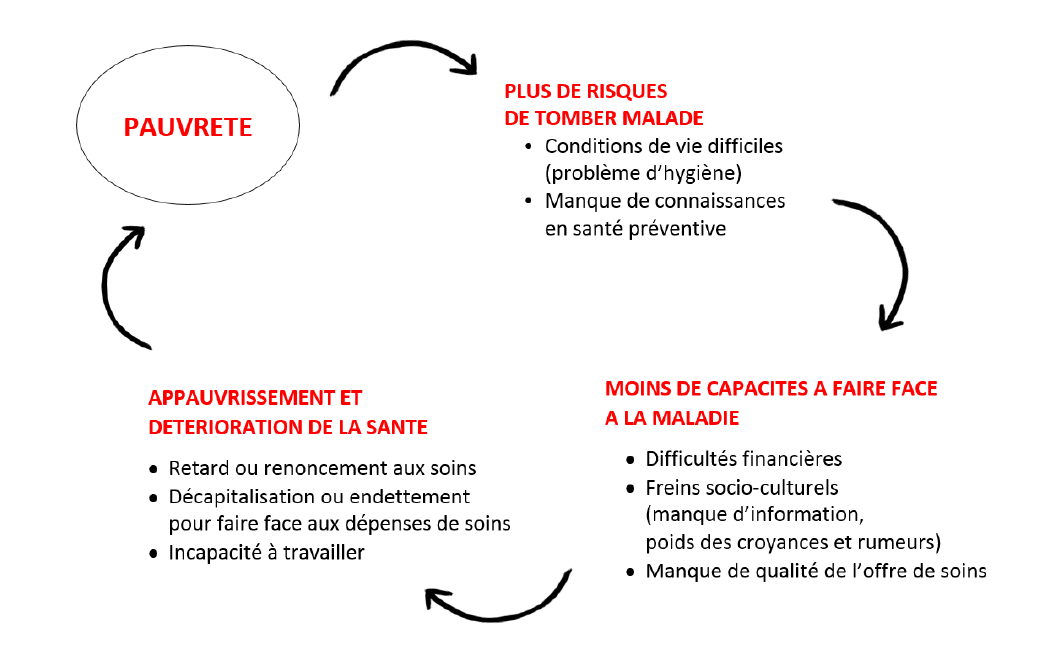
A lack of financial resources and knowledge leads families to go without care or to delay it. Families become poorer in order to pay for treatment, because they are forced to dip into their capital, sell assets or borrow.
With its local partners AFAFI (Madagascar), TOND LAAFI (Burkina Faso) and LAMESIN NYO (Togo), ATIA runs a health and social protection scheme in the form of health micro-insurance combined with medical and social support, in areas and for vulnerable families that have no access to health cover. In return for a small premium of around €1.5 to €3 per month for the whole household, this health cover pays part of the cost of primary care, hospital stays and childbirth with a network of contracted healthcare providers (public health centres, private clinics at social rates, pharmacies). The mutual fund is designed to be balanced, financed by the contributions of the beneficiaries themselves.
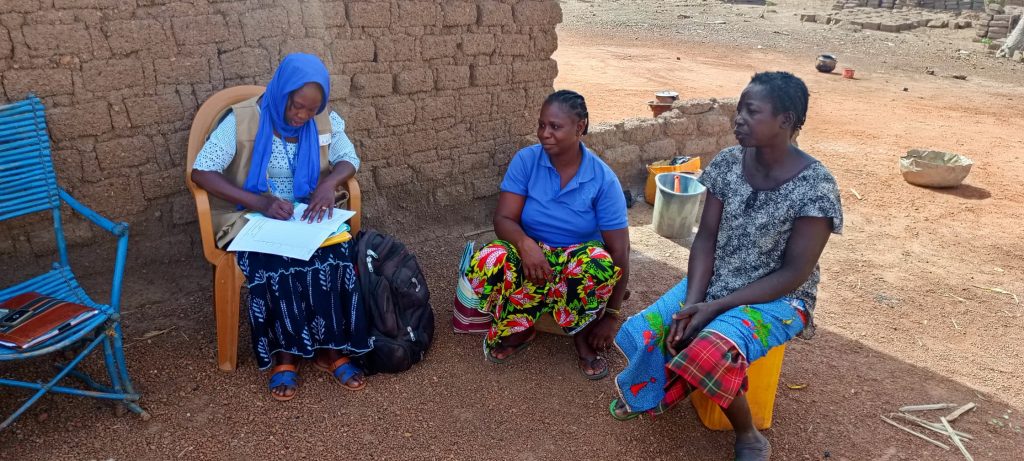
This micro-insurance service is complemented by medical and social support that aims to strengthen knowledge and understanding and to remove socio-cultural barriers to accessing care (beliefs, rumours, stereotypes). This service includes routine home visits and visits in the event of illness, accompaniment to hospital, a telephone helpline and an on-site service at the branch, as well as prevention and screening campaigns adapted to the local context (malaria, breast cancer, involving men in the use of healthcare for the family, etc.).
The AFAFI programme (Madagascar)
Securing the socio-economic situation of vulnerable families in Madagascar
In Madagascar, only the minority who work in the formal sector, i.e. 10% of the population, can have access to health cover (1). For the rest of the population, access to health cover through a mutual remains very low. Families in the informal sector, who make up 90% of the working population, therefore face strong financial barriers to accessing care, which leads to delayed or forgone appropriate care and to the impoverishment of the household when a health problem arises, through borrowing or selling assets. Indeed, as care must be paid for, with no provident or “prepayment” system, families have to deal with the health problem when it occurs, at a time when their resources are limited and volatile. Added to the financial barriers is a set of socio-cultural obstacles. Lack of information, misinformation and the weight of beliefs and rumours are all factors that limit vulnerable families’ access to appropriate care.
Sources:
- UNDP. Available at: https://www.undp.org/fr/madagascar/ (in French)
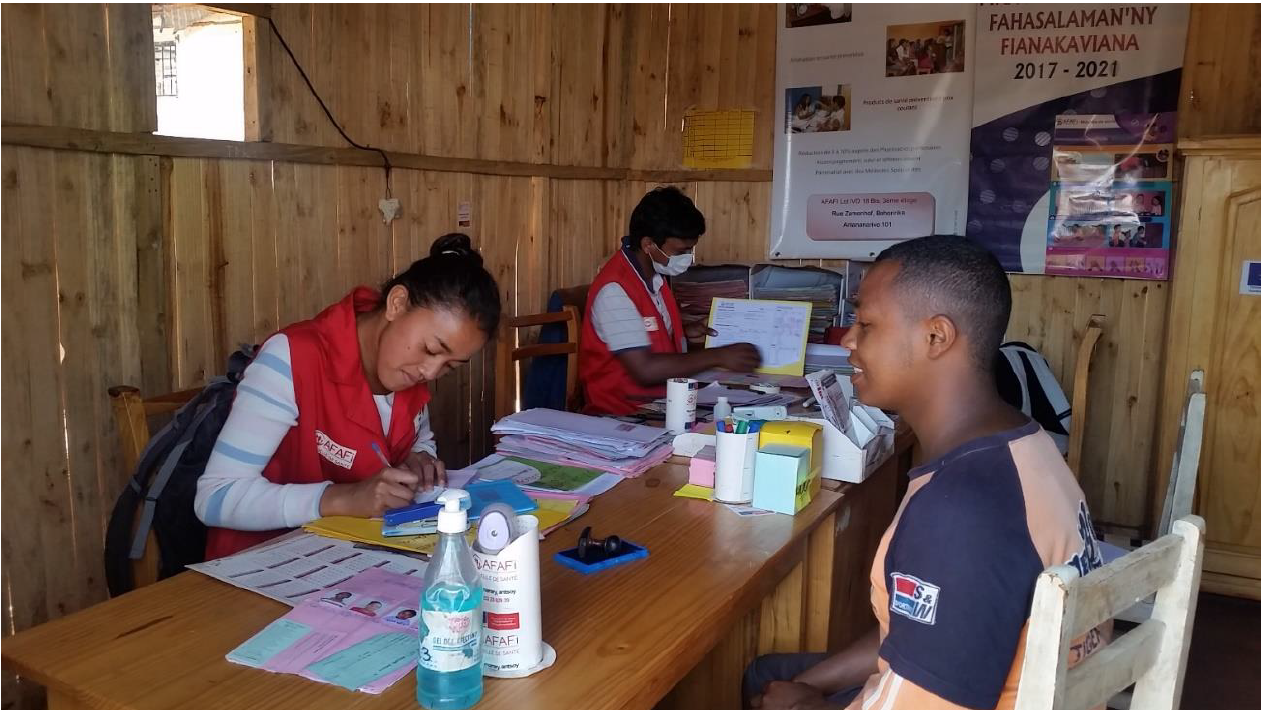
AFAFI responds to delays and forgone care, and to the impoverishment of families in the event of a health problem or an accident. These families, from the informal sector, had no access to any health cover and lacked i) financial means and ii) knowledge about the healthcare on offer and about health in general, including preventive health. To respond, AFAFI relies on two complementary services:
- health micro-insurance, which protects families’ socio-economic situation and increases access to care by covering expenses at the time of care;
- medical and social support, which is the added value of the model. This support aims, first, to strengthen knowledge and understanding, and therefore use, of the micro-insurance service, which is a new concept for beneficiary families; and second, to remove socio-cultural barriers to accessing care through the close and intensive presence of AFAFI’s facilitators, who build a space of trust with families. It also allows families to turn more quickly to appropriate healthcare providers, and so avoids repeated unnecessary visits for care, which speeds up recovery and lowers the total cost of treatment.
LEARN MORE
about the latest results in figures of the programme
about the location of the programme
Report on AFAFI (2014)
The TOND LAAFI programme (Burkina Faso)
The aim is to help improve access to healthcare for vulnerable populations in Burkina Faso in a lasting way, by strengthening a health and social protection scheme (HSPS) based on the training of local stakeholders, the improvement of health practices and the development of technical management and monitoring tools. More specifically, the aim is to:
- Strengthen the health knowledge and practices of beneficiary families through awareness-raising activities and close medical and social support, in order to encourage preventive behaviour and faster use of health services.
- Improve access to care for vulnerable families through a health micro-insurance scheme and operational support that removes financial and socio-cultural obstacles to using health services.
- Improve the quality of care within the network of contracted providers by developing training and technical support activities for health professionals, notably on applying treatment protocols, analysing prescriptions and the rational use of medicines.
- Strengthen the technical and organisational capacity of the HSPS through team training, the development of management and data analysis tools, and improved steering methods, in order to foster its gradual and lasting autonomy.
TOND LAAFI aims for changes in health behaviour. With this in mind, the HSPS takes a holistic approach, combining complementary health micro-insurance and medical and social support services, to address the many barriers to care faced by vulnerable families.
This combination of informing and raising awareness among the population with financial coverage of care enables our beneficiaries to enter a care pathway by acquiring better consultation habits (see the study carried out with the University of Bordeaux). With this scheme, going to a “real” health centre gradually becomes familiar to them, and they learn to seek care sooner after the first symptoms, without waiting for their health to worsen and for emergencies that are costly for everyone in financial, physical and psychological terms.
In parallel, TOND LAAFI acts as a public health observatory, highlighting cases of irregularities in medical practice observed through the data collected by the HSPS.
LEARN MORE
about the latest results in figures of the programme
about the location of the programme
Report on TOND LAAFI (2025)
The LAMESIN NYO programme (Togo)
The aim of LAMESIN NYO is for vulnerable populations in Togo to have access to health cover and to break the vicious circle between poverty and health. More specifically, the aim is to:
- Improve knowledge and practices related to health (prevention practices, etc.) and to the services of the health and social protection scheme among beneficiary families.
- Increase the use of healthcare by vulnerable families through the health micro-insurance services and close medical and social support.
- Strengthen the quality of care within the network of contracted healthcare providers, by consolidating the medical and technical follow-up provided by health professionals, supporting the implementation of the protocols in force and working closely with the health authorities, in particular the regional health directorate.
- Strengthen the capacity of the HSPS to support gradual and lasting autonomy in managing its activities.
LAMESIN NYO aims for changes in health behaviour. With this in mind, the HSPS takes a holistic approach, combining complementary health micro-insurance and medical and social support services, to address the many barriers to care faced by vulnerable families. This combination of informing and raising awareness among the population with financial coverage of care enables our beneficiaries to enter a care pathway by acquiring better consultation habits, for example: reducing the time before seeking care after the first symptoms appear, seeking care at an appropriate health facility, and avoiding self-medication.
In parallel, LAMESIN NYO acts as a public health observatory, highlighting cases of irregularities in medical practice observed through the data collected by the HSPS.
LEARN MORE
about the latest results in figures of the programme
about the location of the programme
Testimonials from LAMESIN NYO beneficiaries (2025)