


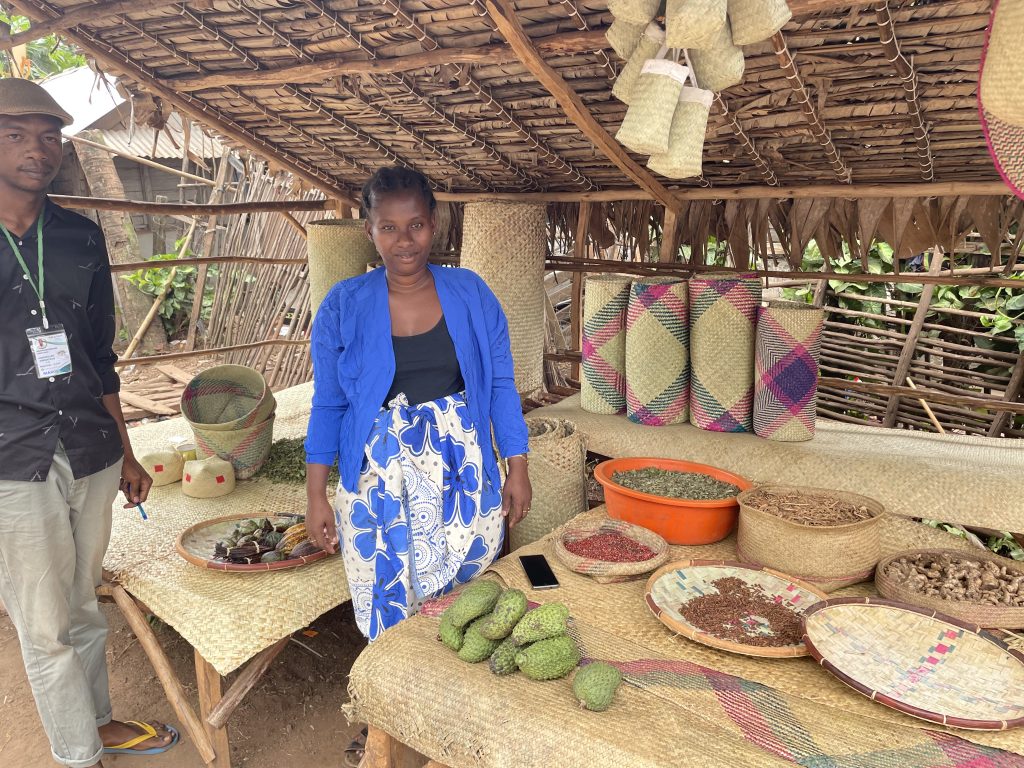
Programmes run by our partners MAMPITA and SAHI in Madagascar
Integrated social microfinance (Madagascar)
To help vulnerable families improve their living conditions, ATIA takes part in the creation of local microfinance institutions in Madagascar that offer several services in an integrated way.
Micro-entrepreneurs are trained and supported to estimate their expenses and income and to formalise a loan application. The first loans are for a limited amount, with no collateral required. Those whose activity grows and who repay successfully can then borrow increasing amounts, while saving alongside the repayment of their loan.
In addition to this economic service, micro-entrepreneurs and their families systematically join a health insurance scheme, and those who wish to receive family support to resolve social problems before or alongside their economic project.
MAMPITA and SAHI
This integrated model is carried by the local institutions MAMPITA (Mahajanga region), SAHI (Manakara region) and VAHATRA (Antsirabe region, an association that is now autonomous).
MAMPITA and SAHI, supported by ATIA, finance and support the most deprived micro-entrepreneurs in the Vatovavy-Fitovinany, Boeny, Sofia and Betsiboka regions (and Haute Matsiatra from 2028). These are households living below the international poverty line who carry out, or wish to carry out, an income-generating activity (farmer, craftsperson, trader) and who want to build lasting savings. In doing so, their general standard of living (health, housing, children’s schooling) is improved.
More than 82% of beneficiaries are women, which is a response to the multiple vulnerabilities specific to women in these regions: early marriage (in the Sofia region, one young woman in two aged 20 to 24 was married before the age of 18 – EDSMD-V 2021), domestic violence (41% of married women – DHS 2021) and very limited access to land (58.8% own none, compared with 43.7% of men). Added to this are difficult access to care (maternal mortality of 445 per 100,000 live births; only 25% of births attended by a skilled provider in the Vatovavy-Fitovinany region) and the lack of identity documents, which blocks children’s schooling and access to assistance, especially for single mothers. The social and medical support offered by SAHI and MAMPITA also helps to address this type of social and health problem faced by the most precarious families.
In rural areas, beneficiaries are organised in farmers’ unions and can benefit from agricultural loans in the form of:
- “seasonal” loans, to finance the expenses of the growing season (seeds, fertiliser, labour, equipment hire) when household cash flow is at its tightest;
- “storage” loans, in exchange for a stock of rice deposited as collateral, which allows farmers to avoid selling their rice cheaply at harvest and to meet their needs after the lean season;
- “collection” loans, allowing farmers to buy rice at harvest from distant farmers, to resell it to a collector or wholesaler, or to store it for a few months and sell it when prices are higher.
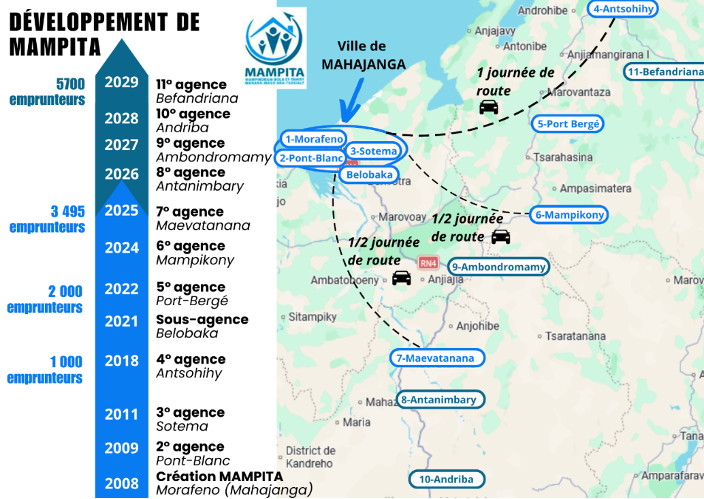
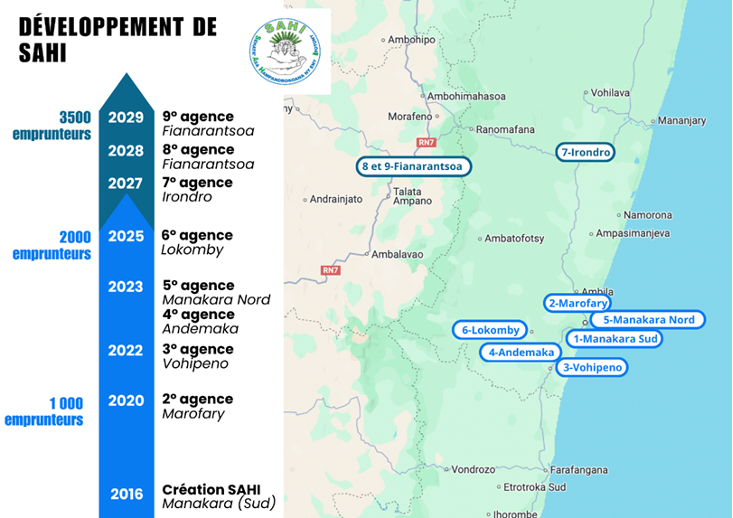
As they grow, these microfinance institutions tend towards financial and operational autonomy. Expansion is gradual. Each branch opening is preceded by a field survey to gather residents’ needs and build a typology of families, so that the support offered can be adapted as closely as possible.
Development of MAMPITA and SAHI
LEARN MORE
about the latest results in figures of the programmes
about the location of the programmes in Madagascar
Reports on MAMPITA beneficiaries and “success stories” (2017)