

Programmes run by our partners TOHANA and KETRIK’ASA, in close partnership with KOLOAINA
Vocational training and employment (Madagascar)
The overall objective is to fight poverty and promote socio-economic inclusion, aiming at the independence and skills development of the most disadvantaged.
In Madagascar, most of the economic activities of vulnerable populations in deprived neighbourhoods take place in the informal sector: women work as laundresses, water carriers or childminders; men work as rickshaw pullers, porters, bricklayers, etc. Their incomes are characterised by being low and irregular. Yet access to employment is a key factor in families’ development and improves their situation both economically and socially.
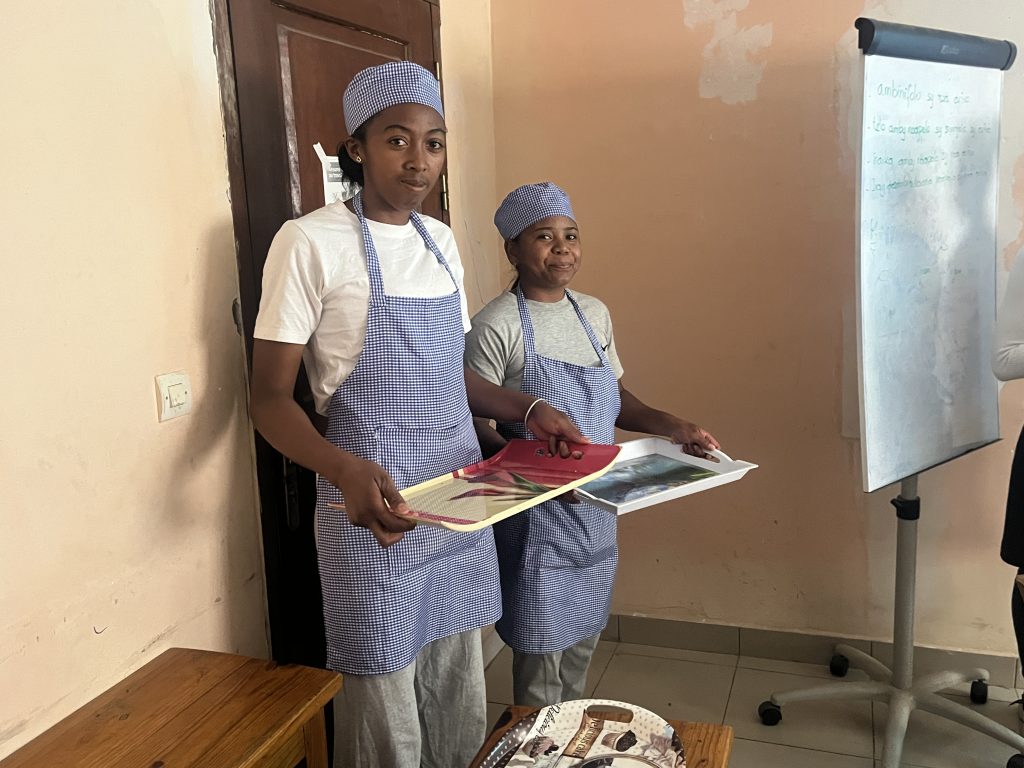
Many companies, particularly in the Antananarivo free zone, are looking for people with few or no qualifications. However, placing this population in companies is difficult because of their low level of schooling, their lack of vocational skills suited to the formal sector, and behaviour that is not well aligned with the demands of employers. The training offered by local partners aims to address these challenges, combining behavioural training (punctuality, hygiene, managing a salary) with technical learning in growth sectors (industrial sewing, IT, personal care services, self-employment).
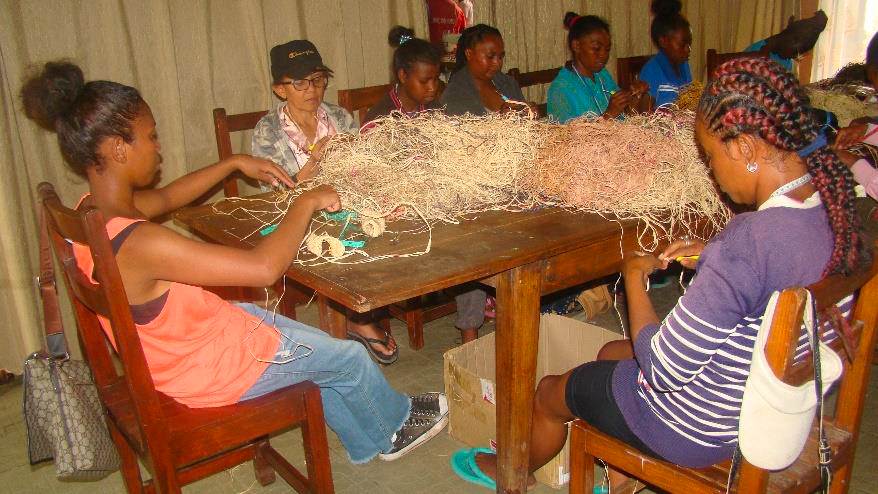
TOHANA thus offers an integrated training and job placement pathway for women in great vulnerability, often referred after psychosocial support with KOLOAINA: training in sewing or in early childhood care, individualised support before, during and after the training, health cover and childcare through an on-site crèche, which makes it easier to return to work. Some trainees also make items sold in partnership with French brands, with the profits going back to the association.
For its part, KETRIK’ASA (formerly ECFORME) offers short training courses for young people and women from deprived neighbourhoods, combining behavioural and technical learning in a variety of trades, as well as support towards self-employment for the most precarious groups. This support also includes help obtaining civil status documents, which makes access to formal employment easier.
At KOLOAINA, the women supported move towards different types of activity depending on their level of independence and motivation: home-based work (sewing, garment-making, crochet), street vending, or salaried employment in the formal sector when their mobility and documents allow. Links are also being developed with employers and training centres to open up concrete employment prospects for the most independent women.
LEARN MORE
about the latest results in figures of the programmes
about the location of the programmes in Madagascar